
Give It a Try: Exquisite Corpse

Low-stakes collaboration is always a blast. Surprises are also a blast. Put them together, and you get an activity as an endearing as it is stupid.
I'm talking about Exquisite Corpse, of course. I grew up calling it Beautiful Corpse, but apparently that was not quite the right name. It's an amusing project that can help you kill some time with some friends.
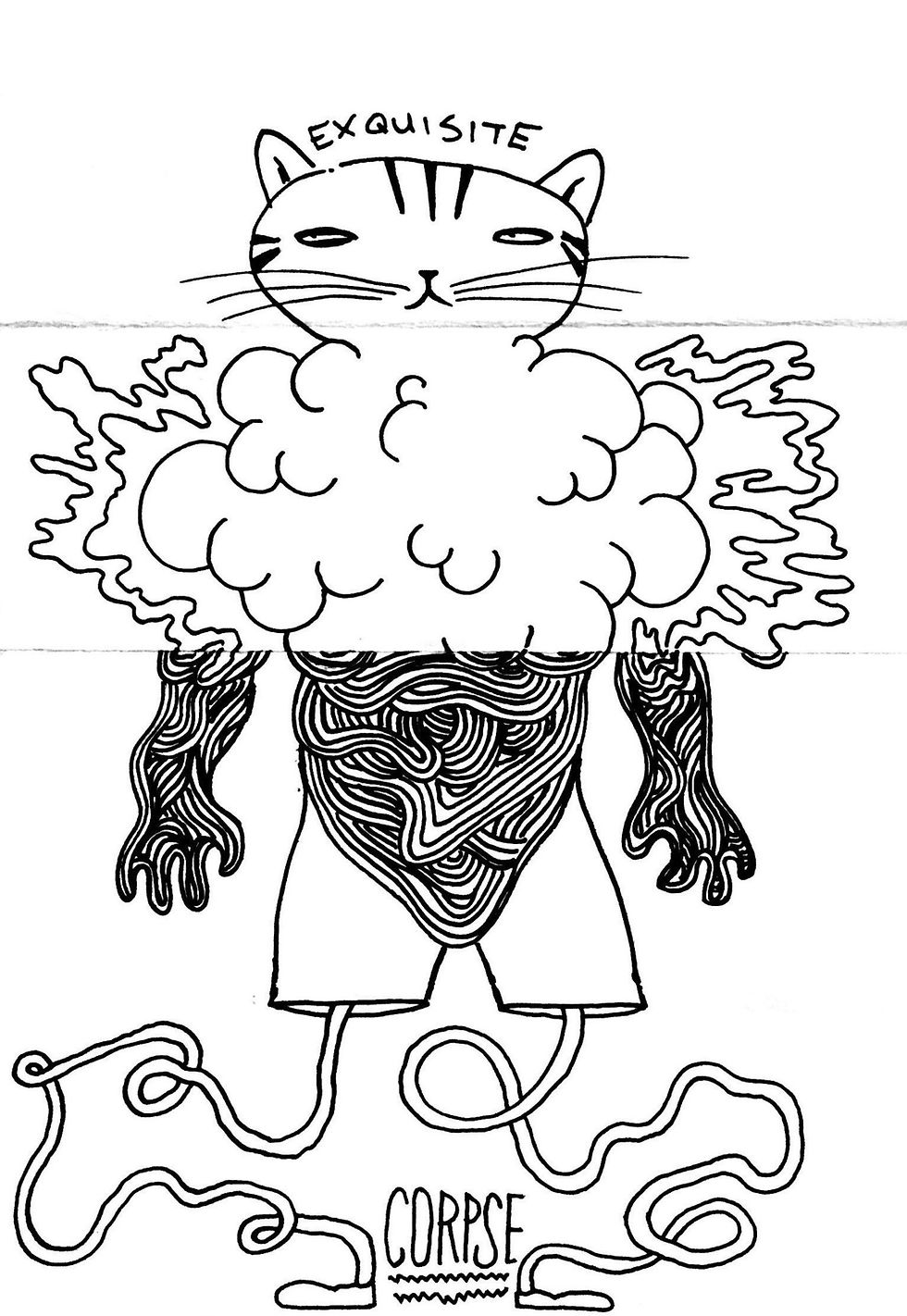
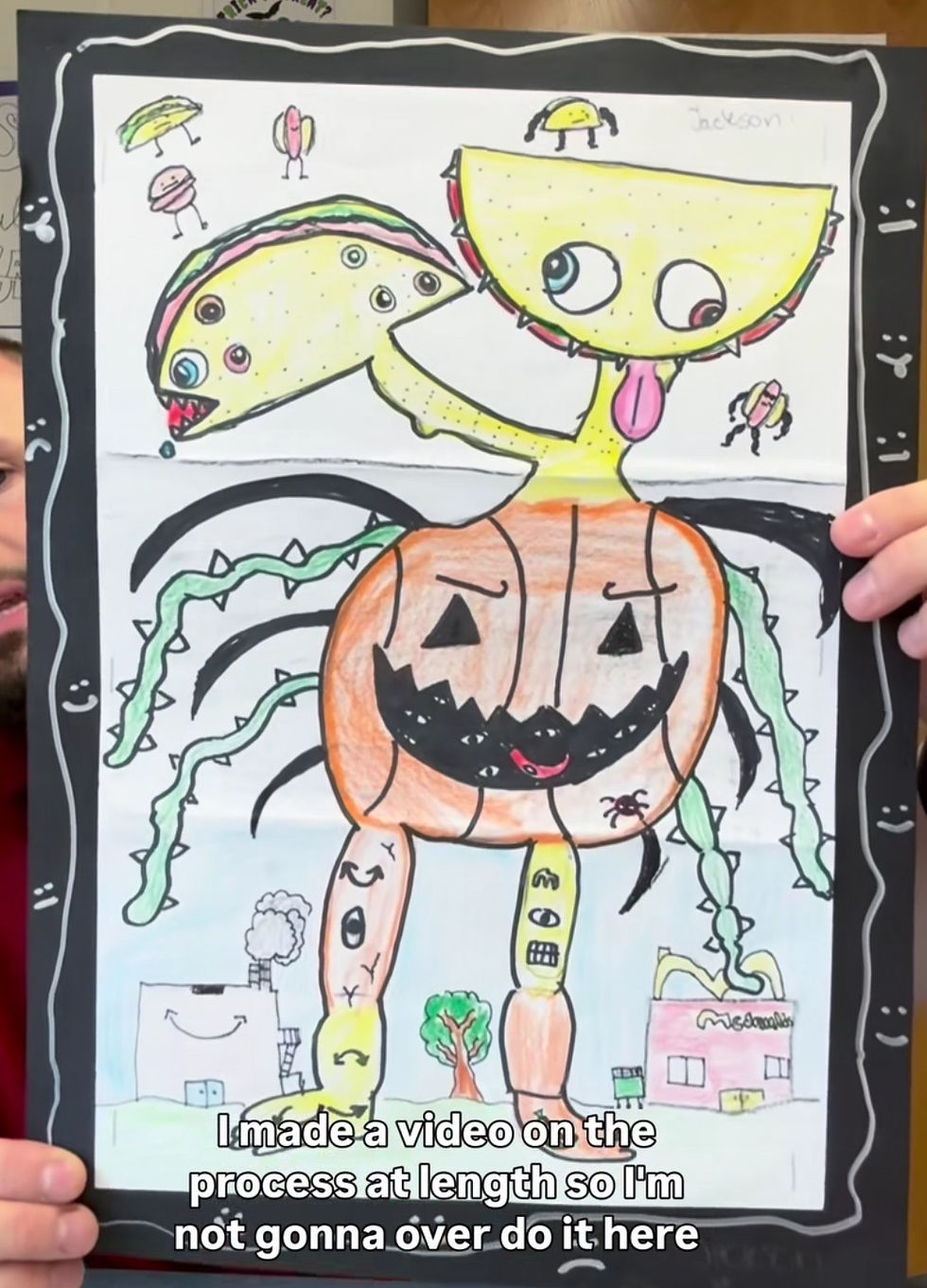
The premise is pretty simple. You divide a paper into thirds. The first participant draws a head. Is it a human? Alien? Giraffe? Sentient spoon? That's all up to their choice. They just need to mark off on the second section of the paper where the neck will meet the body and then fold the first segment to obscure it.
Second person gets the folded paper. Their job is the torso. Is this character a very swole body builder? Maybe. But they might also be a sickly demon whose body has been wracked and twisted by years of dark magic exposure. Or perhaps they are not one single entity, but a conglomeration of squirrels acting together as one.

And what about the head, you might ask? What if it doesn't match the body? Well, seeing as the second participant has no idea what the head is, that is very likely. And that makes it all the better. It's really cool if the torso miraculously ends up matching the head, but it's otherwise hilarious to see a head end up on a very ill-fitting torso.
Then the process repeats for the legs. It could be peg legs, horse legs, or even no legs at all! Maybe the third participant is feeling a mermaid's tail instead. Ultimately, your finished piece is a humorous, often clashing mishmash of subject matter and style. And although this three-part format is the most common way to stitch one together, it really doesn't have to be this way. As long as you've got a few folks making a character with no idea of each other's contribution, you've got a corpse on your hands!

Both kids and adults can participate. It's usually intended to be done quickly, in 30 minutes or less, so there's no pressure to make something crazy good. The fact that each participant can't even see what the others drew also takes away a lot of stress to possibly measure up to the other sections of the piece. Young children truly excel here, as in their eyes there is no such thing as a mistake or a wrong color. They will genuinely pour whatever they want onto that page with zero regard for anything.
And, perhaps most importantly, creating an exquisite corpse fosters collaboration between people. There are, in my opinion, few things as satisfying as seeing the fruits of a combined people's efforts. It's a feeling that I don't get from any of my solo pieces. Slaving away at a painting for hours and months feeds the part of my soul that demands discipline and refinement, but partaking in the creation of a stupid chimera feeds the part that is starved for camaraderie.
As silly as the concept (and name) of the Exquisite Corpse seems though, it actually has a proud history behind it. It has its roots in the game Consequences, in which participants add to a passage or phrase without knowing what was written previously. 1920s surrealists decided to extend this practice to art, and thus Exquisite Corpse was born sometime around 1925.
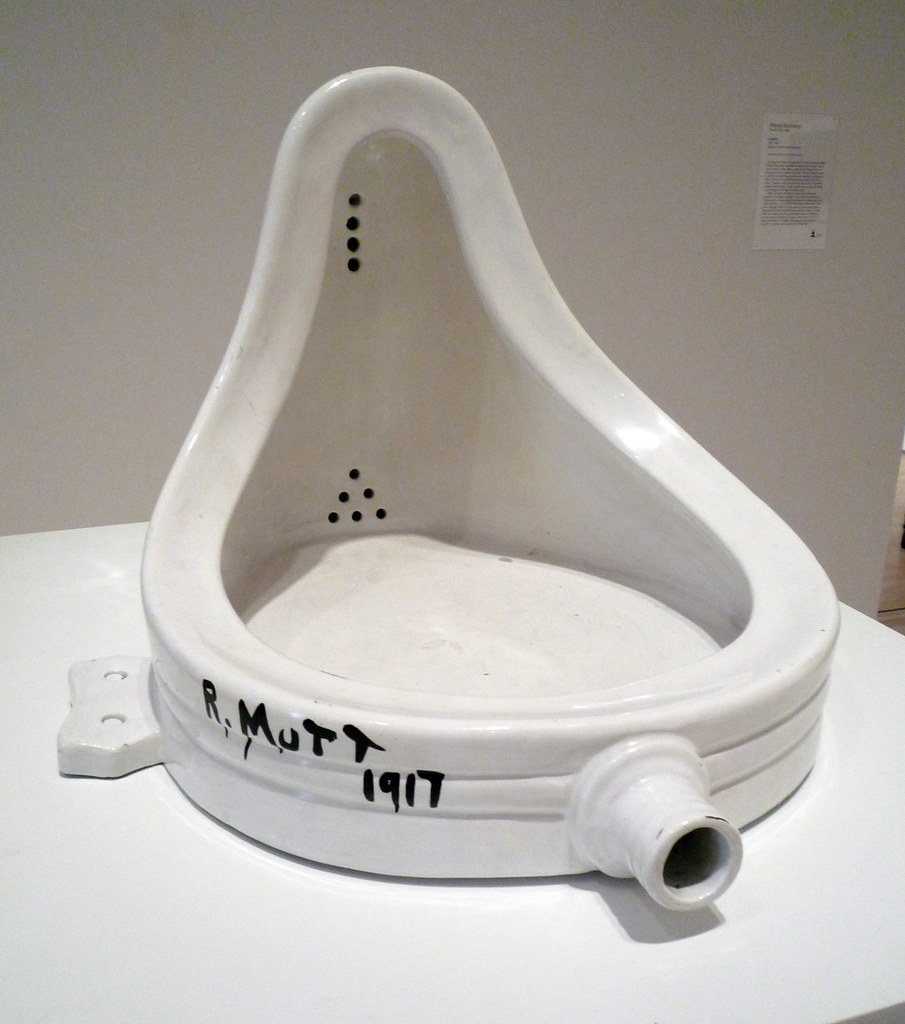
French artists Andre Breton, Yves Tanguy, Jacques Prevert, and Marcel Duchamp (of urinal fame) are most commonly credited as the practice's creators. And, very fittingly, the name itself came from a game of Consequences. During one game, the phrase "Le cadavre exquis boira le vin nouveau" was created. Translated to English it means "the exquisite corpse shall drink the new wine".
Although it started out as a silly game played with friends, the game's quick, comical, and casual nature gave it staying power. Even after its founding group split up, artists continued to bring their misshapen homunculi into existence. It became a shining example of collaboration and the ingenuity that it can breed. Famous artists such as Frida Kahlo have even participated in it.
The game has grown and changed over the years, spawning offshoots such as Telephone Pictionary. In this particular spinoff, each participant writes a phrase on a piece of paper. The papers are then passed in a circle and the first recipient draws an image based on the phrase written. Once they finish their drawing, they fold the paper to obscure the phrase and allow the next participant to see only their drawing. And then once that participant finishes their drawing, they fold the paper to obscure the previous participant's drawing. As the papers continue to get passed around, you get series of drawings that are increasingly divergent from the original phrase and that contain visual representations of every misinterpretation.

Our world is perpetually rife with division. Human beings just seem to have this propensity to "other" people that are different from them, no matter how inconsequential or trivial the distinguishing factors may be. Exquisite Corpse is in no way a remedy for this. It cannot rebuild bridges that some humans decide to burn or fill in mile deep trenches that they dig.
But it has a vast wingspan and hollow bones and huge lungs and a thundering heart. It can glide across those gaps and trenches to briefly connect two people who have otherwise chosen to avoid each other.
And, in some ways, I think that is a more effective starting point than immediately picking up the building tools or throwing in piles of dirt. It is, for a lack of a better word, meek and mild. It doesn't arrive with an air of grandeur and a desire to work miracles. It asks for little, just a few gestures made on a whim.
I'm not expecting the average person to just walk up to strangers and ask to make a drawing with them. But any minor bits of collaboration and even just genuine interaction can fulfill the same function: volunteering, participating in local music scenes, local sports scenes, the list goes on. I have seen it first-hand in my community as tons of citizens get together to oppose the construction of data center campuses. These are people from both ends of the political spectrum, who may otherwise prefer not to interact with one another, united in a mutual act.

But let's not reserve this mingling solely for acts marked with the telltale musk of fear. Let us practice it preventatively rather than reactively. A minute of communal mischief is as binding as an hour of desperate collaboration.


Comments